



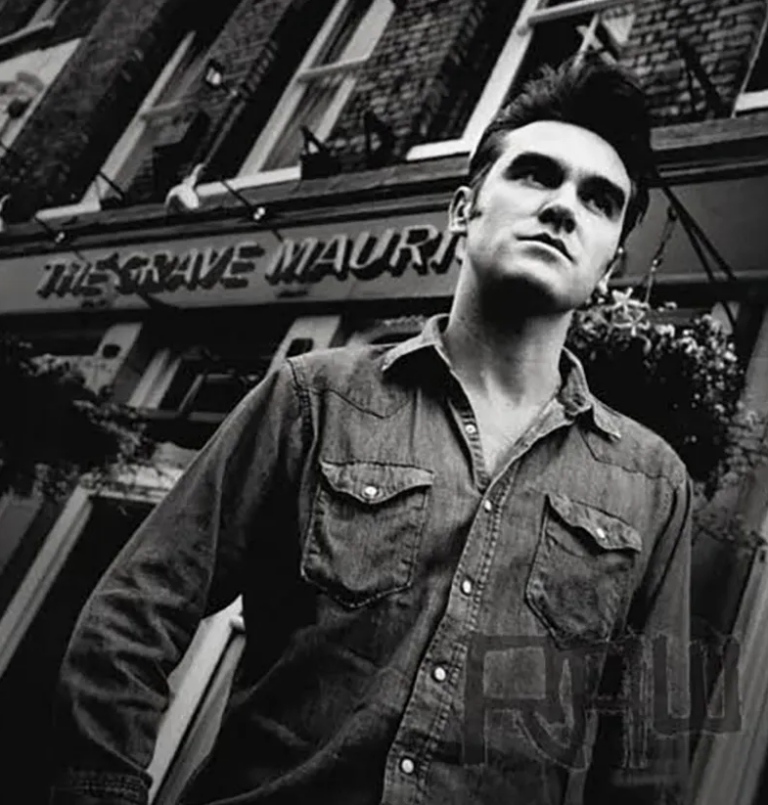
Andrew Stevens gives his thoughts on writing and researching pieces on Morrissey and Iron Maiden’s links to East London.
There is perhaps more in common between these two acts than might first appear or be imagined; both briefly shared a record label (when Morrissey was signed to Attack, an imprint of Sanctuary, the label originally founded by Maiden’s management in 1979).
The work of the late Phil Cohen (1943–2024) on youth cultures has profoundly shaped my own thinking and practice in musical urbanism, not least through his insistence on ‘place’ as an analytical lens and specifically his focus on East London, at a time when both were far less commonplace than today.
In reflecting on his neighbourhood-level work, often in and around Stratford, I found myself producing two studies — one on the early years of Iron Maiden, and another on Morrissey’s solo career and its attachment to the East End of London.
For the Morrissey project I settled on the title ‘Still Ilford’, referencing both ‘Still Ill’ from The Smiths’ 1984 debut album and the East London district of Ilford out in the semi-suburban eastern edge of the capital.
Maiden at least had more carefully defined historiographic resonance from very much day one through their signature ‘Beast’ stylings, which almost auto-generated the title for the ‘Roots of the Beast’ collection (most of which predates their 1982 Number of the Beast album).
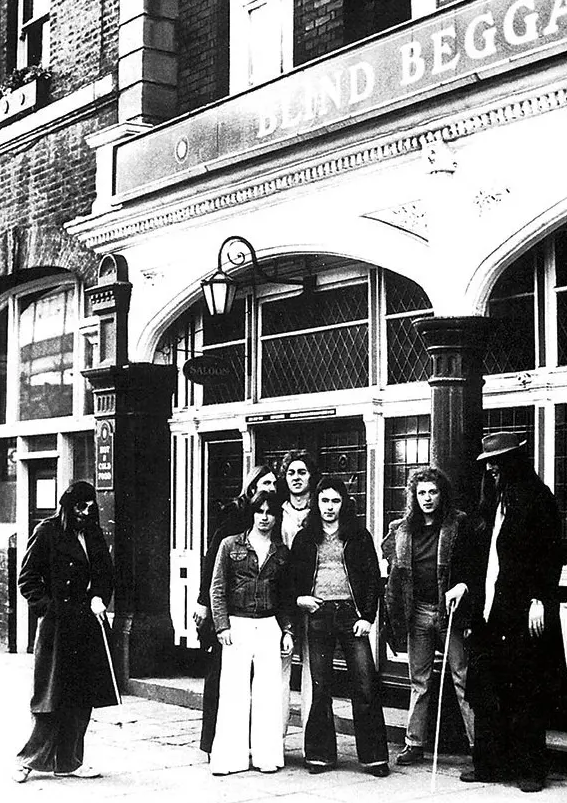
For the actual work itself, I used the Layers of London platform, a collaborative mapping initiative developed by the University of London’s Institute of Historical Research. This allows registered users to overlay historical maps onto contemporary London, mapping the process of urban change by contributing their own materials — images, texts, locations — which are then woven into informally curated spatial narratives. A relative latecomer to the platform, I attended a launch event at UCL a decade ago but only acquired my own login late last year.
The result feels richer than an archive; both past and present are held in the same frame, and the city becomes readable in multiple directions at once. This did have the added benefit of also enabling me to consider why I was even engaged in these two distinct studies in the first place. What animates Layers of London in particular is the way it combines formal archival depth with participatory grassroots contributions. Rather than acting just as a repository of historical materials, it functions as a methodological device, a way of organising and presenting urban knowledge through an act of placemaking.
From a musical urbanism perspective, this is especially productive. Music’s relationship to the city tends to be diffuse — scattered across lyrics, reviews, performances, record covers, and subcultural associations that otherwise resist categorisation among official records.
Layers of London offers, for me as a researcher, a way of anchoring these traces spatially, allowing them to coalesce into geographies that are partial, yes, but coherent enough to be meaningful. Songs can be tied to streets, venues to neighbourhoods, images to specific (literal) corners of the city, creating a form of mapping that holds together both the material and the symbolic.
At the same time, these collections more peered into former live spaces and symbolic videography as these reflect the band as experienced by audiences themselves, both in concert and at home or actively traveling.
It’s worth noting that the platform doesn’t suggest these localised identities and geographies are simply ‘discovered’, not so much revealing a pre-existing musical landscape as actively constructing one, through careful editorial acts of selection, curation, and narration.
In their early days Maiden were billed by promoters as the “Rock Kings of the East End”, while Morrissey has heavily relied on East London iconography throughout his solo career to date. This is entirely in keeping with the lens of musical urbanism, treating the city not as a fixed backdrop but as something continually produced and contested through cultural practice.
The Morrissey collection offers a particularly revealing lens through which to think about how popular music participates in the cultural production of urban space. Rather than mapping a straightforward biographical relationship between Morrissey and the East End, it assembles something more diffuse, a geography in which Whitechapel, Bethnal Green, and Wapping function less as specific locations than as symbolic nodes within a broader urban imaginary.
This imagined East London is built up through recurring motifs — mainly pubs and boxing clubs — that carry the emotional weight of the post-war and late-industrial city. From an urban studies perspective, these images sit within the longer story of deindustrialisation and social restructuring in London’s East End. But Morrissey doesn’t present such transformation head-on. Instead, he works through fragments, atmospheres, character sketches, oblique angles that accumulate into something recognisable, even if unmistakably stylised.
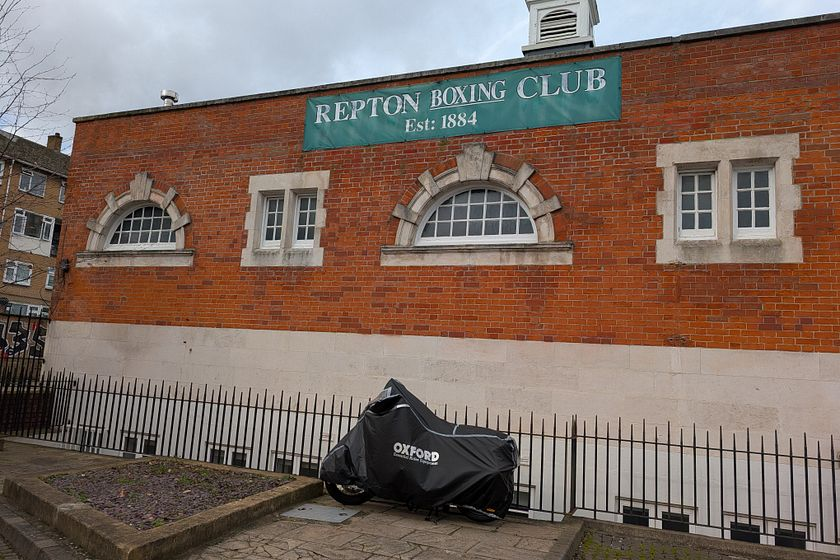
Those fragments are embedded in specific songs and visual texts. Songs like ‘Dagenham Dave’, ‘Boy Racer’ and ‘Sunny’ situate urban experience within a landscape of boredom, marginality, and political unease, hinting at the changing social fabric of outer London without ever quite naming it directly, as a site of working-class identity, subcultural tension, and even racial anxiety. The visual material — album artwork, promotional imagery, music videos — reinforces this geography, drawing persistently on iconography associated with skinhead and suedehead cultures, boxing, and street-level masculinity.
Morrissey’s own public statements have complicated the picture further. Over the years he has spoken in ways that frame English urban life — particularly in the capital — as shaped by loss, dislocation, and cultural change, while at other moments invoking something closer to a romanticised vision of working-class community and continuity. These don’t add up to a consistent political position, but they do reinforce the sense that the East London of his work is somewhere remembered and contested rather than simply observed or there to be exploited.
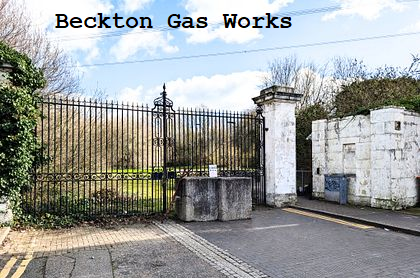
From a musical urbanism perspective, the key point is that this East London is not merely represented but actively produced through cultural repetition. Songs, lyrics, imagery, and performance coalesce into a portable urban imaginary that travels far beyond the places it references. In this sense, Morrissey’s work contributes to a larger set of narratives through which East London is understood, an account grounded not in policy or governance but in affect, identity, and cultural memory. It’s a form of urban knowledge that is partial and subjective, yet all the more influential for all that.
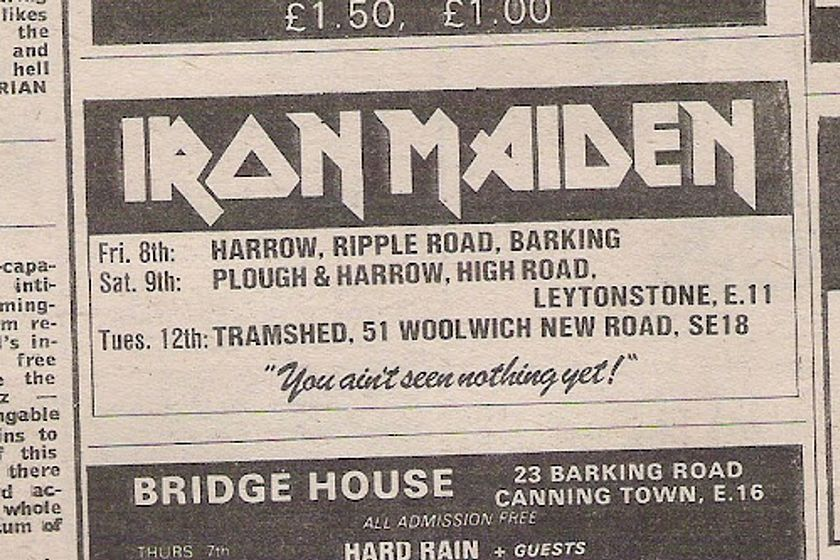
Underpinning both collections here is walking as method. Building the mapped entries — locating sites, photography, writing place-based annotations — required actually moving through East London on foot. This wasn’t simply logistical; it was a methodological orientation that shaped how these musical geographies were encountered and understood at ground level, as noted by Maiden’s Steve Harris in one entry concerning the remoteness of early venues and the loyalty of fans in reaching them.
Walking, as a growing body of scholarship makes clear, is not merely a way of getting from one place to another. It is a form of knowledge production in its own right. Michel de Certeau’s landmark account of walking as spatial practice argued that pedestrians actively produce and reinterpret the city rather than simply pass through a pre-given environment.
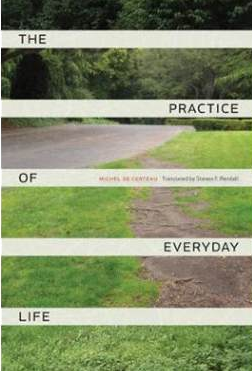
To walk vast swathes of East London in search of Morrissey or Iron Maiden, then, is to remake those urban narratives at street level, tracing, testing, and sometimes unsettling the geographies that songs, images, and myth have suggested.
This connects to a longer intellectual lineage. Walter Benjamin’s flâneur positioned walking as a mode of attentive, receptive observation within the modern city, while Guy Debord’s Situationist dérive reframed it as a more experimental and politically charged form of urban exploration. Both traditions share an insistence that walking offers access to dimensions of the city that more abstract or top-down approaches tend to miss.
More recent work in geography and anthropology has built this into a fully articulated methodology. Walking is understood as an embodied, sensory practice through which knowledge emerges in motion, through what is seen, heard, felt, and encountered along the way. Ethnographic approaches like ‘go-along’ or walking interviews have extended this further, showing how moving through space together can open up spatial practices, memories, and negotiations of place that might otherwise stay hidden.
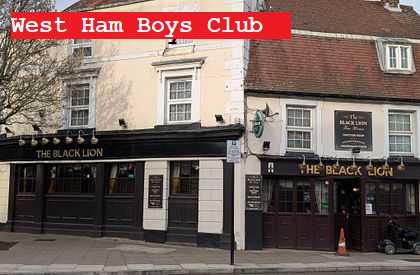
In practice, this means that the East London encountered through these collections isn’t simply ‘found’ — it’s assembled through traversal. Sites associated with the early Iron Maiden often appear as fragments within a transformed urban fabric, pubs repurposed, rehearsal spaces erased, streetscapes altered beyond recognition. Locations evoked by Morrissey may register only faintly, more as atmosphere than fixed point. Walking between these sites creates a sequence, an itinerary, through which past and present are brought into relation, not as a coherent whole, but as a layered and sometimes contradictory experience.
Walking also brings into view what might otherwise be overlooked, the connective tissue of the city — the pavements, crossings, estates, and incidental spaces that link more recognisable sites together — as well as the value of productive encounters in knowledge formation. These in-between spaces echo the infrastructural networks underpinning Iron Maiden’s early career, while reinforcing the fragmentary, atmospheric qualities of Morrissey’s East London. In this sense, walking acts as a bridge between the infrastructural and the affective, the two modes of musical urbanism running through the preceding sections.

At the same time, critical work on walking methodologies is rightly cautious about treating this practice as neutral. Walking is always situated, shaped by who walks, where and under what conditions, and entangled in broader questions of access, power, and visibility. The routes taken, the sites chosen, the images captured, all of these are selective, contingent, interpretive. For instance, when photographing educational establishments there are active concerns around the safeguarding of minors and ethical norms associated around this.
The photographs and entries produced through this process don’t just document East London; they actively participate in its ongoing representation and re-narration. For musical urbanism, the implication is that method cannot be separated from object.
To walk East London in search of Morrissey or Iron Maiden is to engage in a form of applied urban interpretation, where cultural references shape movement and movement, in turn, reshapes understanding. The city is not merely read or mapped. It is encountered, negotiated and reassembled through the act of walking itself.
Andrew Stevens’ article was originally published on the Musical Urbanism Substack and is reproduced here with added pictures and videos by agreement.