


The Replacements were a punk band from Minneapolis, emerging in 1981 as shown in this clip from that year at a local event.
They got caught up in the hard core punk scene but developed their sound.
“Around the time of the fourth [Replacements] album, Let It Be, things were really rolling. Everyone was saying we were headed for the top. For a while we were the coolest band in America. We thought, ‘We’re going to be rich in a couple of years’, and then two years later the crowds are thinning out and you suddenly realise that that was your heyday.”
– Paul Westerberg
After Let It Be, The Replacements got signed by Sire Records and their 1989 album Don’t Tell A Soul had some mainstream success thanks to the hit song I’ll Be You.
As the official video shows, by this point The Replacements have gone angular in sound and vision. 1989 is also when our scribe Jeremy Gluck discovers the band. What follows is Jeremy’s dynamic description of how and why The Replacements’ Paul Westerberg is so important.
In 1989 Jeremy Gluck was working by day as journalist for the music journal Sounds, by night as singer for The Barracudas; so he is no slouch in the musical stakes. When Gluck says The Replacements’ Paul Westerberg is important we listen; we lend him our ears.
Love Untold: St. Paul's Letters To The Philistines
It has been fully thirty years since, in 1996, Paul Westerberg’s second solo album, Eventually, hit the racks and then, commercially, the skids. After welcoming his admittedly brilliant solo debut 14 Songs, the media and the market found in The Replacements’ majordomo some deficits. So the bard went into minor retreat, forever too sensitive and cerebral for a world meriting mediocrity.
My pilgrimage to the Replacements’ shrine started from their album Don’t Tell A Soul and thereafter adoration of the one I came to call “St. Paul of Minneapolis”. This is detailed below. What isn’t, is that after Eventually, Westerberg spiralled up to heights of songwriting and then also sub-production prowess that left his previous already magnificent work drifting in its wake.
This is my own love letter to St. Paul, written originally in 1996 at the time of Eventually. I pull no punches here in my adoration of Westerberg, make no apologies for same, and pray that perhaps even one of you reading it share my enthusiasm for The Great One.
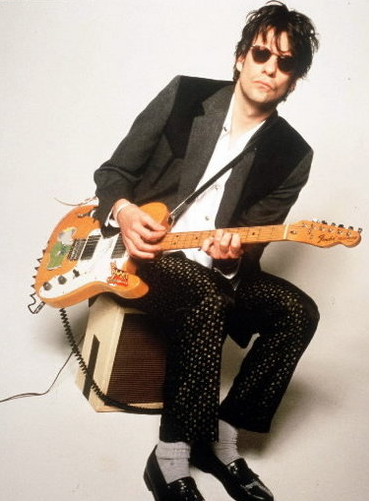
Someone Takes The Wheel
In the hallowed halls of the Mystery Schools of the Great Hardcore Gnosis one question may never be answered: Why Minneapolis? I was in Minneapolis once, for a night, and although my perception may have been preconditioned by a love affair with Husker Du, there was no doubting that here was a rock’n’roll town. But that doesn’t quite explain why, by the mid-‘80s, it had become the Liverpool of the Midwest.
Check it out: Husker Du, a band who would have put any place on the map, and also many others, some on Twin-Tone, some not. So, the Huskers…Prince (!?!) and…The Replacements. The thing is, see, Husker Du made my year (or, to be precise, three years) but the Mats (the nickname came out of ‘the Placemats’, used by Minneapolis hipsters when first the great ones appeared) changed my life.
As usual, being the pig-headed slob I am, it took synchronicity and divine intervention to drag me to them: In 1989 I had to review Don’t Tell A Soul for Sounds, had never really heard the band before (shameful, I know), had some cockamamie idea that they might be just another hardcore combo trying to slow down before fickle fate fucked ’em over.
One protracted exposure (approximately the time it took me to memorise the entirety of Don’t Tell A Soul and perform penances too degrading to detail) and I was nearly evangelical in my conviction that Paul Westerberg was/is the greatest American rockin’ songwriter of the past, what?, ten…maybe 15 years (for what it’s worth, Bono calls him “way ahead”…)
Flash-forward to late 1990. The Replacements’ final album (or Paul Westerberg’s first solo one, depending on your bias and access to tales of Sire’s refusal to release Westerberg without a Mats tag) All Shook Down is released.
Meanwhile, just when I should be in London poised to review it for Sounds, I am in fact on a Godforsaken comeback (or rather, don’t comeback) tour with my band the Barracudas. Day after day, through many lands, I listen with wonder and awe to the album, drinking in its meta-demo genius as, one after another, Westerberg songs the like of which the world has never seen.
The songs ‘Sadly Beautiful’, ‘Nobody’, and most supremely ‘Someone Take the Wheel’ – trip off the bombed capstans of my dented Walkman. And then I see the review that, but for my inexcusable absence, could have been mine… and the reviewer bum basically says, Could Do Better. Westerberg? Do better!?!?! What, and Michelangelo blew the Sistine Chapel, too, I suppose?
To me it was obvious (as truth so often is, and I’m not even perfect!): All Shook Down was – not in style and content – but in lineage every bit the titanic equal of that other great American sonic home movie Blood On The Tracks. Yes, I am comparing Westerberg to Bob Dylan and I don’t care if they hang me for it (‘A’ students will already have realised that it is no mere accident that both Bob and Paul hail from Minnesota)!
We’re into Zen shit here, this is deep, this is, like, that most elusive of sub-genres… call it ‘I Need Somebody’, call it ‘Cheree’, call it ‘Two Faces Have I’, call it ‘Idiot Wind’ call it …white blues. And what Westerberg did on All Shook Down was nail it down (along with the lid on the tribute-laden, flag-draped Mats coffin, lowered July 4, 1991 at an outdoor festival in Chicago’s Grant Park).
Now don’t you ‘placements purists go gnashing your teeth and demanding blood. Of course, dear ones: Let It Be, Tim, Pleased To Meet Me… ageless meisterwerks all of ‘em. Despite a glossy production purists found inimical and puzzling, I believe Don’t Tell A Soul is a masterpiece, too (although the band’s latter-day manager, former Soul Asylum inmate Peter Jesperson has said that “…songs like ‘Anywhere’ and ‘We’ll Inherit The Earth’ were phony little anthems that Paul was feeling pressured to write”).
But only with the great divorce from the Mats could Paul really take wing and find his nest, uh, niche.
Despite the nature of evolution – and that includes pop evolution – remaining somewhat mysterious, we can still venture that it is not only a material but also spiritual process. This is why someone like Brian Wilson, the paragon of spiritualised pop, can be writing about cars and girls one minute and the meaning of life the next (not that the two necessarily aren’t synonymous, mind you…): a leap in evolution, plain and simple, a pole-vault through a window of pop opportunity.
Ditto St. Paul. One minute it’s close to perfect, like ‘I’ll Be You’ or ‘Darling’, and the next it is: ‘The Last’, ‘Nobody’, ‘Bent Out Of Shape’. Nothing fancy. No 48-track hand-jobs. Remember Blood On The Tracks? Same deal: Dylan and his buddies cut a session monster, he gets all moody and re-records simple.
All Shook Down also, except that St. Paul skipped the superfluous first step. (I have to admit that when I first heard it I was confused… enchanted, but confused… it sounded like demos… there’s one place where the drums fall behind, the tracks criss-cross each other fairly randomly…) No fat. Sounds like a shit someone had. But read those stools, there’s messages in that shit! A tale of Twin Cities, Minneapolis-St. Paul! O mighty symbolism!! Let us pray!
And speaking of simplicity, one recalls Alan Vega deriding the Beatles as the beginners of “that rococo crap”, and although Westerberg and the Mats surely derived much from said “crap” and kin, they were never prey to excess; Westerberg even showed consternation for his perceived over-production of Don’t Tell A Soul, which to most of us is busy but hardly adorned! But to Westerberg quality-control is self-control, and he disdains any breaches. “That was a bad period,” said Westerberg of the album, which, like its predecessor, was (for reasons largely inexplicable to this writer) derided by Mats diehards.
“Everything was falling apart – the band, my marriage, my own life.” And boy, does it sound like it. But ‘The Last’ shall be their first… and between cooling his heels and engine, Westerberg knocked out the soundtrack to Singles, buying himself time to metamorphise into the post-high, dry, regular guy who, with foresight to the front, finally picked out tools to sculpt the next masterpiece of his career…
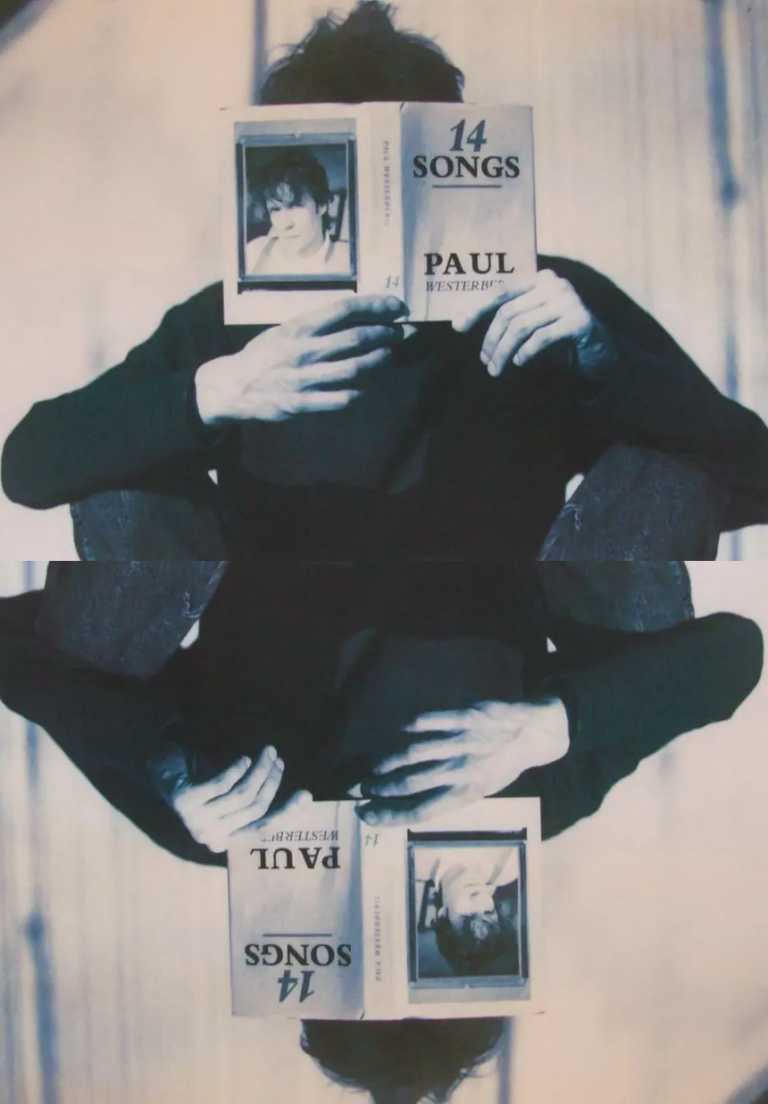
When 14 Songs, St. Paul’s first official solo album, was released, I got it right away. My God, was it wonderful to be assaulted by the hoary scratch of chords that heralds it, ‘Knockin’ On Mine’. As it unfolded, 14 Songs obviously signified a turning point. If All Shook Down, with its couplets calling down junkie partners, had been The End… 14 Songs was the beginning, and this time the songs about junkies were conspicuously second-person, i.e. ‘Black-Eyed Susan’, a genuine demo, stunning enough for its key couplet “See her slight body relax/ Soon her young veins will collapse” even without maybe another dozen as sadly beautiful.
The album had moments of rough-hewn grandeur as witty, wild and uncompromised as any the Mats ever did – for example ‘World Class Fad’, of which Westerberg has said, “The song is about me. It’s just a rock and roll song that people are reading a much deeper meaning into. The whole crux of it is just remember to leave a trail of crumbs. And it’s like, I did leave a trail of crumbs, and I went all the way to the edge and couldn’t go any further.
“It’s more of a reflection of what I went through and probably am still faced with going through now. It’s like if you want that bad, if you want to go all the way, remember where you started from and remember where you’re going to end up again. And yeah, if it offends anyone, great! But it absolutely is about me. I don’t know if I’ve mellowed that much, but I’m not at the point where I just want to give young bands shit. It’s like, I’ll give you some shit but I can take it too, so … No, I mean, that’s pretty fuckin’ small to think that I’d write it about a popular band.”
Or ‘Something Is Me’, priceless for “Something went wrong/ My name is Paul” (ever noticed how all the real greats get all self-referential…c.f. Bo Diddley, Jerry Lee, Van, The Ig etc?), and ‘Down Love’, with its flailing cry of defiance, “Love is deaf!”
But beyond its songs pitched just right between introverted bemusement, bare-faced bewilderment and abundant beauty bespeaking St. Paul’s bottomless pit of cherries, 14 Songs intimated a new way forward not yet entirely within grasp: a toned-down, grown-up Westerberg with both hands on the wheel… the bum note being sounded, as ever, by the masses, whose misfortune it was not to submit to psychic surgery en masse, then offer their still-warm internal organs to the Great One in crass obeisance. Simply inexcusable…
And so it came to pass that Eventually eventuated. Thirteen songs this time. It began in Atlanta, under the aegis of Pearl Jam producer Brendan O’Brien, but the collaboration didn’t gel, and most of it was co-produced in L.A. with Lou Giordano. As soon as I read about it, I thought… “Jeez, whaddoes this one or that one sound like??” Almost better’n’having it was thinking about having it. Hearing it. Because with a writer of the magnitude of Westerberg you just know that inside and all around a title as cute as ‘Century’ must be packed wisdom, melody and purpose-muted machinations the measure of the architecture of the Taj Mahal.
Westerberg does not fuck around anymore. These days when he writes a song, he goes the whole nine yards. So it proved. Eventually, appearing a scant three years after its predecessor, is the album not only St. Paul but every songwriter of worth should be able to write. It screams “maturation” with all the restrained self-knowledge only corroded cult status confers.
This is where Westerberg stakes his claim. It starts sad, gets a little mad, gets very lost, gets over it, gets first-personal. If music can ache then this is the sound of a full set of wisdom teeth begging extraction. Just cop ‘Once Around The Weekend’ or ‘Time Flies Tomorrow’, the latter a prime contender for all-time greatest Westerberger, and tell me you don’t want to hop on a flight to Minneapolis with a bouquet for the bum!
Now, any selection from this album warrants at least ten thousand words (and if you really believe I couldn’t knock out 130,000 words on Westerberg you should have your head examined!), but for the purposes of brevity I will single out only one here and use it to, if you will, provide a cut-away guide to the glories of Eventually. And the song in question?
‘Love Untold’
“I think a lot of the album is perfect in its imperfection. Like the breakdown at the end of ‘Love Untold’, it could have been redone to make it more dramatic or something but that’s really how it was, we just all sort of stopped playing. It was real. It was passionate.”
– Paul Westerberg
“Actually, Paul was writing quieter songs early on, but he was reluctant to show anybody because he thought it was weird. So at the same time he was writing stuff like, ‘I need a goddamn job’, he was secretly writing these plaintive acoustic ballads.”
– Peter Jesperson
“I’ve made a folk-pop record. I’m very comfortable with that. I’m totally aware that people are going to say it isn’t as raw as it used to be. Well, it’s not supposed to be. I would be embarrassed.”
– Paul Westerberg, Vanity Fair
First, a little context. ‘These Are The Days’ starts the album (apparently it took only four years to write: “I’ve written 50 songs since the day I tried to write it, and it would still keep cropping up, whether I was riding my bike or walking down the street”). Quiet. Very hummable, very much the public service renouncement: “Mr. Westerberg’s ego has left the building”. “These are the days no one needs/…they’ll never call nobody like me.” (If I had your home number, Paul, you’d be filing for harassment!).
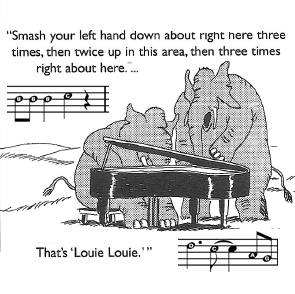
It is followed by ‘Century’, which manages to accommodate about 30 brilliant couplets with cops from the Sweet’s ‘Ballroom Blitz’, which St. Paul may not have been consciously fleecing I know…but there is such a thing in pop-psychology as the Collective Unconscious (Light Entertainment Division) wherein resides every stinking riff and line ever stirred into the unholy pot that is these past 40-plus years of popular music. (‘Louie, Louie’ is the only song with an entire dimension to itself, incidentally.)
On to ‘Love Untold’. It might be said that the riff rings, its highly-strung twang catchy enough to adhere flies to its very surface. Such is the art of St. Paul: if you must have a riff then have one that exerts enough sheer melodic gravity to bring down a Russkie satellite. And so the tale begins: “They were gonna meet/ On a rocky mountain street/ Two bashful hearts beat in advance…”
Whoah! Is there a lifejacket handy? Deep! What words! Oh yes, and you think you can do better? What makes them so special? I dunno, what makes the smile on the Mona Lisa special, Jethro…it ain’t the quantity, it’s the quality. One stroke: “Two bashful hearts beat in advance.” It gets better, too. “Their hands were gonna sweat/ It was all set/ She ain’t showed up yet/ But there’s still a good chance.” Hold me down, someone, before I implode! If you could just hear the inflection on that last line… “…there’s still a good chance.”! It’s positively enough to cripple you.
Y’know, back on 14 Songs our patron saint name checked famed Southern novelist Carson McCullers and now we know why (and, come to think of it, Westerberg’s even reading an eponymous book on the cover of said solo debut): because St. Paul is writing books-as-songs, dammit! Each line is a sort of hyper-textualised tune-cum-novella. And the frightening, almost intimidating thing is that he knows exactly what he is doing.
I read somewhere that he told some guy he wanted people to glom the words on this one, hence the very low-key backing.
Sure he does, the way a peacock wants you to see his feathers! What’s he been doing these past three years? I bet he’s been pacing a weird little purpose-built laboratory, tinkering day and night with words, trying numberless combinations… to do this: “Checkin’ on her face/ Checks his sleeve for his ace/And both just in case/ Their clean underwear…”
“Face…/ ace…” What? You think such a couplet happens by accident?? Go on, chump… don’t you see what’s happening? Paul Westerberg is angling to monopolise every perfect pop couplet in existence in perpetuity! World class domination, no less! Well, better Westerberg than Sting. But back to the point (whatever that was)…
“Games will be played/ Excuses will be made/ The stupid things they say in their prayers…”
“…in their prayers…” Still wonder why I call him St. Paul? Make no mistake, St. Paul burned mucho midnight oil on this one! Words, but what words…and a melody to bring tears to the eyes of Genghis Khan, enhanced in its gentle margins by keyboards conveying a universe of lost love. Not just another song but nearly an evil statement of intent.
Diabolical St. Paul wants it all. Which is why he goes on to complete ‘Love Untold’ thusly: “They were gonna meet on a crummy little street/ It never came to be I’m told/ Does anyone recall/ The saddest love of all/ The one that lets you fall/ With nothin’ to hold?”
Face it. You and I could not hope to write that last verse, even in 20 lifetimes. Perhaps, with a support team we might manage the first two, but that last verse, sung in a voice so world-weary as to require constant monitoring by a dozen paramedics, is beyond the reach of all but Westerberg… and, curiously enough, maybe one Bob Dylan.
Ha! I’ve got you now! You can’t deny it! VICTORY IS MINE BUT ALL GLORY MUST GO TO ST. PAUL WHO ALONE HAS IT IN HIS POWER TO FORGIVE THE MILLIONS OF PEOPLE TOO TRAGICALLY MISLED TO MAKE HIM INORDINATELY FAMOUS AND WEALTHY.
A More Sane (sic) and Rational (not) Appraisal of the Same Song.
“I was very relaxed about the writing and pace at which I recorded this album, and I think that’s reflected in the songs. And I chose a batch of songs that all felt the same way. I wanted to make this album easier and more accessible than 14 Songs.”
– Paul Westerberg
‘Love Untold’, then, is the pivotal track of St. Paul’s latest and most perfect work to date. It is, in essence, a surgical exposure of the romantic dreams of youth and a retrospective glance at same. To paraphrase the words spoken to me by the Great Dictator, Andy Shernoff, Westerberg’s voice is soulful, and indeed what St. Paul seeks to download is his soul’s experience in this world. Don’t laugh: listen to Iggy’s scream at the beginning of ‘Death Trip’ and then tell me what you’re hearing isn’t a soul being rent by experience.
Likewise, listen to Westerberg sing “The one that lets you fall/With nothin’ to hold” and try to kid yourself that what backs up every intonation and intimation of his delivery is not his very soul. That’s the thing about real white blues: it has soul. And the reason folks get lost trying to find it in obvious, formalistic expressions – say, George Thorogood – is that they are tuned to an imitative note, not a true, intuitive one. White blues is not about shotgun shacks, it’s about penthouses.
There’s a bridge in ‘Love Untold’, by the way: “Soft hands slowly move across a blank white page/ Looking for words for my silence and fears to obey”. I keep asking myself: why the sudden switch to first person? A hip shrink would have a field day: oh, Westerberg is making explicit the fact that we all carry within us numerous distinct personalities, yet the song is, of course, only about him.
They’d be right, too, but it’s worth adding that the universality he taps into is not just an accident but the result of a process of lengthy apprenticeship to an art that descends from the troubadours of olde: I’m talking folk tales, fairy tales (“Once upon a love untold” ), spooky stories. Singer-songwriting is a noble calling and nobler vocation, but until it can really break through to authentic folk storytelling (anyone who just thought “Dylan again!” gets a gold star) it’s just a hall of mirrors.
What Westerberg and fellow masters do is smash – exhaust – so many mirrors that, finally, what they write becomes real. Being nearly pathological in his self-effacement, St. Paul will say, for example, “I collect one-liners. It’s more like writing jokes. If I find one a line that works I’ll throw a couple of chords in and then try and write a melody around it. I usually write the chorus first, because that’s easiest.” Haha. Paul, cute. But you give yourself all away, because what to you is “easiest” is to lesser mortals (lesser gods??) about as “easy” as picking your teeth with your toes… blindfolded.
That’s why ‘Love Untold’ and the other amazing songs on Eventually are important not just for Westerberg, his loyal following, his record company and his dog and Japanese guitar but for rock’n’roll in general: the guy has taken risks, he’s let himself evolve and deliver in a way that even on All Shook Down still seemed an impossible dream. It’s what Springsteen flashes on Tunnel Of Love and Lucky Town, what Mark Eitzel does on California and everything else. What Iggy did on Zombie Birdhouse, what Bowie did once or twice on Low. What Suicide always did. Blues. Soul.
Oddly, perhaps, what Eventually also exemplifies is the kind of God-haunted explorations undertaken by Morrissey at his best, which might be sacrilege to some. Nevertheless, lyrically at least, there are moments, such as ‘Good Day’ – about the late Mats guitatrist, Bob Stinson, taken at 25 by the combination of drink, drugs and destruction that characterised the band’s whirlwind progress – where the levels of parched emotion equal those attained by Mr. Smiths on, say, ‘I Know It’s Over’ or, better still, ‘Asleep’: “Hold my life for the last time/ A good day is any day that you’re alive”.
In a Rolling Stone interview at the end of last year [1995], after Eventually was in the can down at Paisley Park, Westerberg simply said, “There were two years after my last record where I didn’t have to do anything. I’d just sit and watch the day roll by. And then somebody you know suddenly stops being and it’s like, ‘Why am I wasting my time? I’ve got to do something and grab this fuckin’ day by the horns.'” Those two lost years fit neatly into ‘Once Around The Weekend’, where St. Paul wearily intones, “I stay in every night of the week/ They try but I won’t speak/ To be my friends/ You’ll see me once I’m on the mend…“
‘Love Untold’ is remarkable, but then so is ‘MammaDaddydid’, Westerberg’s explication of his disinclination to breed: “Decided not to have any part of wonderful live love/ Decided not to have any children like my MammaDaddydid/…That was their way, though it’s not mine/ Guess they did okay, at least they tried”. To the cold-blooded this is just piffle, perhaps, some sad sack spreading his middle age. But it’s so simple and powerful and pure: the guy doesn’t want to have kids, which is fine, but between the lines the emotional charge is: All I want is kids.
Westerberg does this all the time, twisting the knife from the inside out. Only the greats do it. Only they know how. Take the refrain to ‘Good Day’: “A good day is any day that you’re alive”. Wisdom, and in context quite heartbreaking (indeed, in one interview Westerberg, beginning to discuss the song, actually broke down), purchased at the price of a melody and verse that volunteers to roll itself in an acid bath of melancholy.
Ditto ‘Time Flies Tomorrow’: “Time flies tomorrow/ But it ain’t made a move yet/ …And tomorrow makes a day since we met.” (The other great thing about it is that, in the midst of its elegiac splendour Westerberg keeps tossing in these two very fuzzy chords, chords that are not just embellishment but some very funny, very serious self-referential gesture, a keeping of faith with the Replacements at once touching and utterly corny.)
But it isn’t all black and blue. ‘You Ain’t Got Me’, with its sprightly intro, comical lyric (its opening gambit, “You’ve got call waiting/ It’s irritating me no end” is yet one more magical word ploy) and enough backing vocals and harmonies for six songs as long, all arranged with loving care, is Westerberg Lite, preposterously upbeat amidst the soul wreckage of the set’s tooth-n’claw numbers. And what of ‘Trumpet Clip’, many minutes of convoluted funk topped with Tommy Stinson’s unschooled trombone?
Words don’t fail me, but my words fail Westerberg, and that just ain’t good enough. You’ve read this and probably think, What a jerk. So I’m a jerk! But to be tired of Westerberg is to be tired of life.
To never to have heard him is to need to get a life: Buy Eventually, give it three days, and if you don’t find yourself somehow saved then by all means grab a Black & Decker, fix a monster bit, bore through your sternum and see if you have a heart.
“I’m in a difficult position,” Westerberg says. “These are almost the impossible years for a rock ‘n’ roll singer, or a pop singer, because I’m not quite revered or old enough to be considered an old veteran who would get the respect of a Tom Petty or a Costello or a Dylan… I’m still young enough where I can be looked at as, ‘Well, he used to be younger.’
“Once you reach about 40 or 41, no one expects you to be young anymore. So I’m still battling that stigma, and I think the problem is that I’m ahead of my time. I’ve always been ahead of myself a little bit. I’m already preparing for people to accept me as to what I am now, and I realise they’re not going to until they see me physically hobbling up there on stage.”
© Jeremy Gluck
(a previous version was first published in the fanzine Bucketfull of Brains, 1996)
postscript
Back when I was a kid – well, a teen, so a big kid – there was a series of artists supposedly “the new Dylan”. Springsteen, sure, and later unsung NYC folk rocker Willie Nile. And then there was Steve Forbert. What nobody seemed to have noticed is that while all this was going on, somewhat in the style of the long-delayed, much-hyped Messiah, the newest Dylan was yet to appear.
Then, indeed, fittingly from the same state as Dylan, after his apprenticeship as a hardcore, then post-hardcore artist, the Messiah came, but of course was overlooked for his messianic cred. Make no mistake, though – and if I say it it must be true – Paul Westerberg was that new Dylan. Now, I get it: how could the new Dylan sound so little like the old? It should be obvious, but that is how great art works: how do you get from the pope of Velasquez to that of Francis Bacon?
Great art is a process of transformation – even transfiguration – and so seeing Westerberg as the putative “new Dylan” is I admit a leap of the imagination. All the same, as the years of Westerberg’s solo career passed with varying degrees of success, and more often, by the measure of his native market, failure, his body of work became redolent of a talent the sideways equal that of his fellow Minnesotan. There can be no direct comparison, and there shouldn’t be: it is about art, not ‘mart.
Anyways, after Eventually, Westerberg, with some wariness, but with ‘berg fanboy Don Was at the controls, in 1999 released on Reprise the magically melancholic, introspective Suicaine Gratifcation. It flatlined. Badly. Why? Pearls before swine, people. Suicaine upped the ante in the Westerberg songwriting stakes, though, a minimalist set ideal for paens to pain such as It’s A Wonderful Lie, Self-Defence, and the remarkably beautiful and saddening piano-based piece Bookmark, the latter perhaps the greatest, most poignant and piercing song written on the subject of childhood sexual abuse:
Father left
You were crushed
Like the petals of a flower
Between the pages of a novel
A long forgotten bookmark
The end of a sad chapter
When he left her she read no more
And so left all trust
Of any man that wants you
To dress in black plastic
Or sing with your eyes only
As though you were autistic
This is powerful writing, but it is understandable that for a lyricist famed for his wordplay and sometimes slight content that by the time Westerberg was maturing into a fiercer writer it was hard for many to accept such a strident transition.
After the commercial demise of Suicaine, Westerberg retreated back into his basement, literally, where in his backward home studio situated there he, amidst depression, forced sobriety, and much self-reflection, started fashioning a great many lo-fi pieces. Sick of the majors, once he had enough material he approached a reputable American indie, Vagrant, and they jumped at the opportunity to release what became the double album Mono/Stereo.
Released in 2002, Mono/Stereo is just four sides of unrestrained, raw genius at every level. Mono, the “rock’n’roll” half, stacked with punk power pop classics like AAA, played off beautifully against the acoustic half, Stereo. The latter is a remarkable outpouring of masterclass post-folk such as Let the Bad Times Roll (composed originally for a movie about the Prozac era but never included), and touching fragments of the St. Paul psyche like We May Be the Ones; all of them still featuring that signature wordplay but also venturing into a sort of existential, introverted minefield of displaced feeling, disillusionment, and downgraded happiness.
From the heights of Mono/Stereo Westerberg, for Vagrant, proffered Folker (2003), and Come Feel Me Tremble (2004), both packed with superior, basement beauties. Come Feel Me Tremble found Westerberg either precocious in his creative petulance with gritty rockers like Dirty Diesel and Making Me Go, or deliciously downcast, not least on the masterpiece ballad for Sylvia Plath, Crackle’n’Drag:
She made a good go for a weeping willow
She stuffed some rags on the floor
She closed the window
She made a pillow on the oven door
And took a long deep breath while her babies slept
His cover of Jackson Browne’s – an idol of Westerberg who the latter confessed to seeing up close but being too intimidated to approach – These Days, is faithful and felt. Meanwhile. Folker features less stellar material, though My Dad, a touching homage to Westerberg’s rough-hewn late father his relationship with whom was for many years prickly, and the glorious pure pop Lookin’ Up In Heaven maintain in bursts the glow of Westerberg at his best.
After crafting a soundtrack for an animated film, Open Season, Westerberg went pretty quiet. In 2006 he released online nearly an hour of home demos, 49:00, and thereafter briefly reformed The Replacements with Tommy Stinson, reportedly thanks in part to the large guarantees they received to revive their by then totally legendary brand. But the reunion was short-lived and Westerberg now appears dormant creatively, hopefully comfortably retired.