

A journey through the 1958 novelty hit single Purple People Eater by Sheb Wooley, it meant nothing till it meant everything.
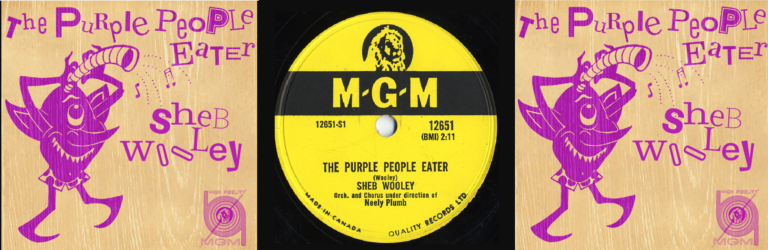
The Purple People Eater meets James Dean
“That is undoubtedly the worst song I’ve ever written,” decides Sheb Wooley. An hour earlier Wooley was chatting to a fellow songwriter when Don Robertson’s child posed a question, “what has one eye, one horn, flies and eats people?”
The answer to the riddle is ‘a one-eyed, one-horned, flying people eater.’ After laughing at the joke and the child’s precocity, Wooley there and then riffed musically on the words; an hour later the song ‘Purple People Eater’ was finished. This was April 1958, at this time Wooley had been recording songs professionally without much success since the early days of 1945, when the early days were really the early days of the recording industry.
Born in 1921, Sheb Wooley first directed his energies to being a rodeo rider before injuries forced him out of the saddle. These rodeo injuries also meant he failed to get into the army so instead Wooley took up singing and a country and western recording career. For the 1951 film Distant Drums, Wooley voiced what has become known as the ‘Wilhelm Scream’, which has famously been used in many, many films since (including all of the Star Wars and Indiana Jones movies).
A man of many talents, when he wasn’t recording Wooley was appearing in tv shows such as the Lone Ranger and Rawhide, plus many, many Western films. As well as the scream, his highlights are playing the outlaw Ben Miller in High Noon and an uncredited part in Giant with James Dean. Sometimes even singing, as in the clip below.
Aliens invented Rock and Roll
With that pedigree under his belt without making a personal breakthrough, Sheb Wooley was both in the loop and frustrated. Having a musician’s ear to the rhythmic riddle response, it is easy to see him immediately strumming a guitar and singing the line then adding ‘purple’ to correct the rhythm. This is 1958 and music tastes have changed leaving Wooley behind, so he invents a reason for this dastardly people eater coming to earth – to join one of those damned rock n roll bands. All rock and rollers are aliens! It’s the only thing that makes sense.
The “we wear short shorts,” and “we like short shorts” lines of the song are speeded up and taken wholesale from the Royal Teens’ single Short Shorts which was a hit at the same time of Wooley writing his song; both were in the charts at the same time!
Not that the singers were regular Royals, the story goes that a couple of girls hanging around the studio were brought in and told to repeat the two lines at designated spots while the band played the song. When referencing this song however, it is interesting that the ‘short shorts’ lines cause many people to recall it, a good pinch by Wooley.
Innovation disguised as novelty
When Wooley was persuaded to make a recording of his ‘terrible’ song; what influenced him and transformed the song into an international hit was the speeded-up phrase in another song, ‘Oooh-eee-oooh-aah-aah Ting-tang Walla-walla bing-bang’. ‘Witch Doctor’ was their template as in the studio Wooley and engineers treated everything recorded on tape as the beginning not the end; raw material to be moulded into novelty madness. Recording toy saxophones at a slow speed then replayed at high speed? Bring it on.
Wooley and his engineers were not alone, in many recording studios tapes were being slowed down, speeded up, sound effects added, played backwards and otherwise doctored to within an inch of their lives. Such studio manipulation would be lauded in later years as revolutionary, progressive rock experimentation; in 1958 it was just called novelty records. What came out at the other end of the process with Wooley’s recording was the single ‘Purple People Eater’.
Wooley took an acetate of his finished song to his record company but MGM rejected it as rubbish. Later, the old men of MGM were taken aback when they saw younger office staff setting up a daily lunchtime danceathon to the Purple People Eater acetate, so they held their nose and released it. Within nine weeks after its May release, the single had sold 1,500,000 copies. An article in Time magazine from July 1958 about the phenomenon around the song notes that USA is awash in Purple People Eater hats (with built in horns), t-shirts, badges, and ice cream.
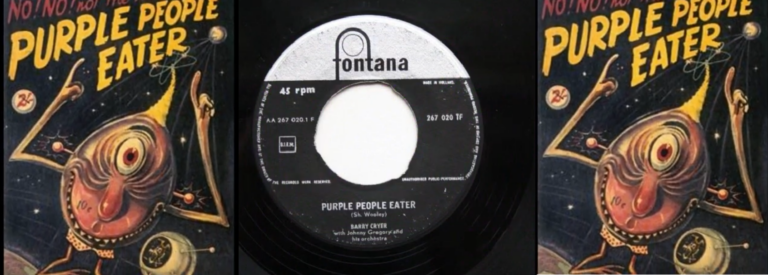
Barry Cryer
Wooley is also quoted in Time magazine that, “the Purple People Eater lives at my house. Hell, he bought the house for me.” UK’s comedy writer and legend Barry Cryer could say the same as he fell into a number one single with the song in Finland by mistake; instead he plays it down by laughing, “they must have given away a car with every single.”
In a well-oiled, Soho discussion with singer Frankie Vaughan, Cryer suggested he should make a comedy record. Vaughan went to Fontana Records and said if they want to sign him they must also sign Cryer. The singer was big business at the time so Cryer was bundled in as part of the deal. With no idea of what to do with him, Fontana told Cryer to make a cover of the American hit ‘Purple People Eater’.
Fontana blew their small production budget on a barrage of sound effects with sparse musical backing. The few session musicians sound like they have never seen their instruments before, let alone have any idea of what song or style they are meant to be playing. This leaves Cryer’s atonal, non-musical vocal to carry the tune and that’s not going to happen. Barry bravely battles through it, ending in a whooping, cacophonic climax.
Despite or because of the chaotic racket, Cryer’s version is undeniably exciting. Due to Wooley’s label having no licensing rights in Scandinavia his version was not released there. Novelty pop fans in the frozen North had Barry Cryer’s version or nothing: they chose Cryer. Frankie Vaughan’s Cryer clause worked out well for Fontana but they failed to capitalise on this success, the unlikely number one hit singer went back behind the curtain and continued his legendary, comedy script-writing.
Judy Garland
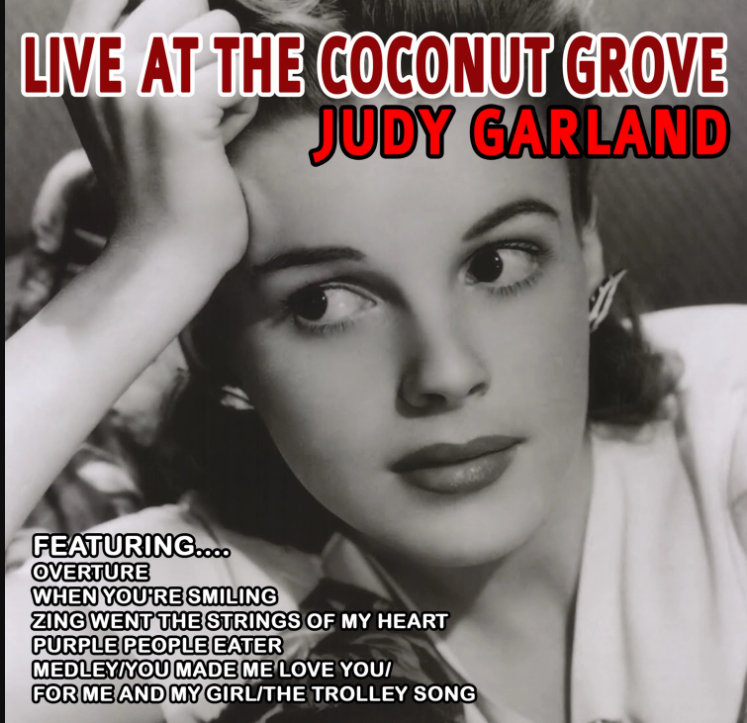
1958 is not over yet and nor is the song as it crosses into high art. Whilst Wooley’s version is sending America into ‘crisis’ (Time magazine again) Judy Garland adds the song to her live repertoire in a season at Coconut Grove, Los Angeles through July. Judy!
She doesn’t just sing it, Judy introduces the song with a two minute comedy monologue referencing sci-fi films and tv shows of the day. It is unbelievable to hear Judy go comedy monologue, then she sings and does all the ‘we wear short shorts’ asides herself.
Capitol Records released a live recording of Judy performing Purple People Eater on the album ‘Garland At The Grove (Coconut Grove, Los Angeles, performances through July 1958)’ but my research indicates the version on the record is actually from a performance in Chicago on 9 September 1958. That shows this was not a one off performance but that Purple People Eater was a constant part of her shows.
Bopping along
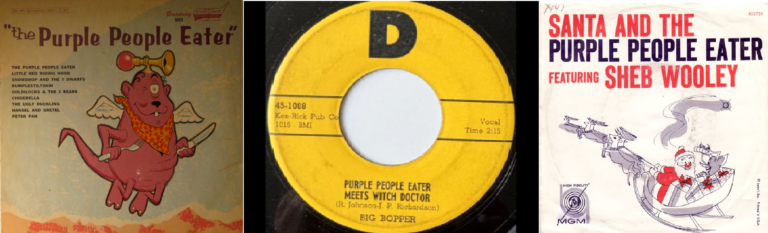
The origins and mad success of the song is great, Barry’s one hit wonderdom is fun; Judy’s involvement is funtastic. There were many cash-in follow-ups to the hit single and not all by Sheb. Notably in August 1958, Purple People Eater Meets Witch Doctor was released as a single by the Big Bopper, who co-wrote the song.
Chantilly Lace was the b-side. DJ’s flipped the record and the Bopper went big, all thanks to the purple one.
To infinity and beyond

This ‘worst song’ has continued on through popular culture ever since, referenced or sung in many films, computer games, and television shows, for example in the 2024 animated X-Men series. The purple people eater will never die.
All versions referenced in this article are available on youtube, so put on those short shorts and give them a listen.
(first published in SIG News issue 5, magazine of the UAL Subcultures Interest Group)